


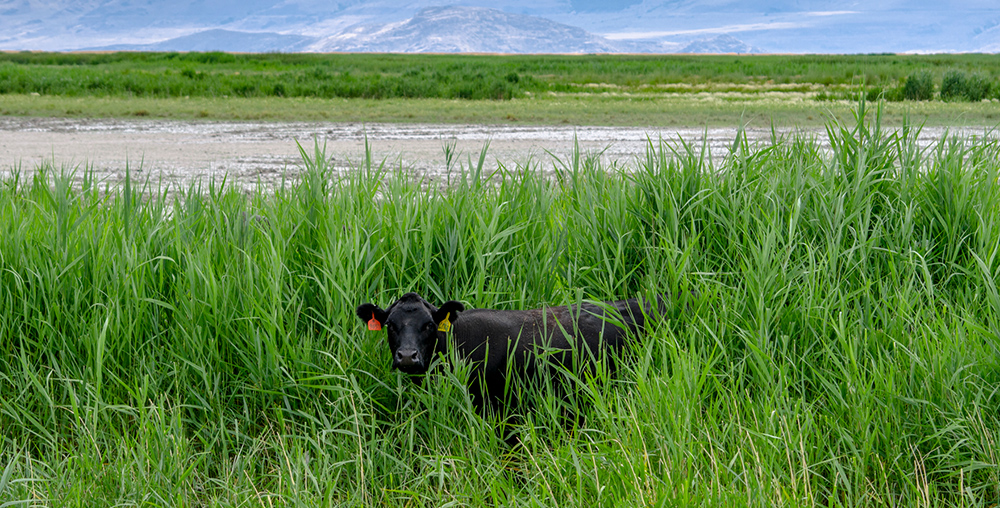
Cattle, the best weapon to control the invasive phragmite weed in the bottoms of the Great Salt Lake, help keep the ecosystem in balance. (Photo credit: NCBA/Baxter Communications)
Let’s be honest about where the meat industry sits right now: cattle supplies are at historic lows, plant capacity has shrunk but utilization is still a daily headache, and wholesale beef prices are sitting at record highs. With the herd expansion cycle years away from offering meaningful relief, packers and processors aren’t fighting for volume. Everyone is fighting to protect margins and keep buyers committed to the protein you deliver to the case.
When prices are this steep, retail merchandisers and foodservice buyers scrutinize every cent. If you walk into a review selling beef as a pure commodity, high prices turn your product into a target for category trimming. But when you arm your sales team with concrete stewardship data, you shift the conversation from price per pound to overall strategic value.
The View from the Wetland Flat
This summer, I had the pleasure of joining the United States Roundtable for Sustainable Beef (USRSB) and the Public Lands Council as they hosted a large delegation from the UN’s Food and Agriculture Organization. Because the UN had proclaimed 2026 the International Year of Rangelands and Pastoralists (IYRP), the FAO delegation flew from Rome to learn more about North American grazing practices.
So there I was, standing on a rocky bottom flat in Utah’s Bear River Delta, exchanging brief introductions with Dr. QU Dongyu, Director-General of the UN Food and Agriculture Organization (FAO), while the delegation listened intently to how cattle became the best weapon against a wetland invader. This was where I had an “aha moment”, seeing yet another link between solving real world problems that celebrate nature and provide an avenue to answer consumer’s questions while meeting demand.
Down in the Great Salt Lake bottoms, local producers face phragmites—an aggressive, choking invasive weed that easily grows to 10 to 14 feet high, smothers wetlands, and blocks wildlife habitat. Chemical sprays can kill it but they also take native plants leaving the wetlands degraded long-term. The best alternative to fight this intruder? Turn out the cattle.
As Chase Goody, ranch manager at JY Ferry & Sons, a diversified cattle and crops operation located to the northeast of the Great Salt Lake, explained before we toured the bottoms, their ranch management philosophy follows a simple motto: “See everything through the eyes of a duck.”
By evaluating land health through the lens of wildlife habitat, the team at JY Ferry & Sons realized cattle prefer young, nutrient-dense phragmites shoots over knee-high grass. The cattle cleared dense reed walls that even coyotes couldn’t push through, reopening waterways and allowing native vegetation to return without a single drop of chemical spray for over 12 years. The result? Restored wetlands, thriving herds, and the return of trumpeter swans, which had been virtually nonexistent for decades.
Arming Sales Teams for Record-High Markets
What does a Utah wetland flat have to do with selling beef in a high-price, tight-supply market?
Buyers are under intense pressure. On one side, executive suites and shareholders are demanding progress on Scope 3 carbon and biodiversity goals. On the other side, inflation-weary consumers are questioning meat prices.
Major players are making significant investments in sustainability efforts:
- McDonald’s committed $1 billion over the next decade toward farm-level supply chain resilience, targeting regenerative agriculture and landscape-scale grazing to tackle Scope 3 footprints.
- The Meat Institute introduced standardized reporting frameworks to help packers deliver verified supply chain ESG data directly to retail buyers.
- Major Packers are expanding verified pasture-to-plate land stewardship efforts to provide their partners with the data needed to make consumer facing sustainability claims.
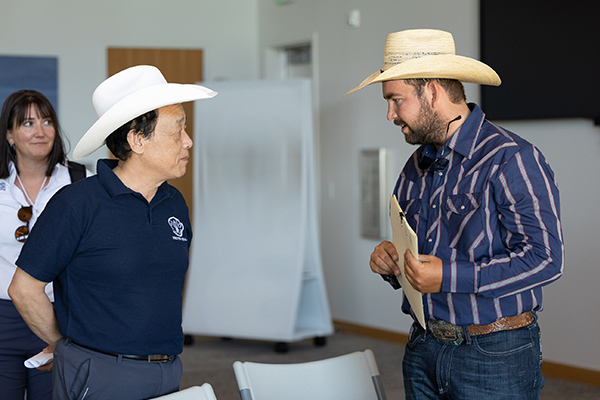
Chase Goody, JY Ferry & Sons ranch manager (right), explains to Dr. QU Dongyu, Director-General of the UN Food and Agriculture Organization (FAO), how their cattle grazing on phragmites, an invasive wetland plant, helps keep the ecosystem in balance. (Photo credit: USRSB)
When your sales reps meet with retail buyers who are pushing back on elevated wholesale beef costs, a pure price negotiation is a losing battle. But when your team can prove that the beef in your supply chain is actively restoring wetlands, eliminating chemical usage, and managing public lands, you transform your product from an expensive commodity into a strategic asset for their ESG goals.
You give that buyer the exact justification they need to keep shelf space allocated, maintain premium brand positioning, and defend their protein category decisions to corporate leadership.
Protect the Margin, Win the Customer
Tight supply cycles tempt companies to go quiet on marketing and pull back to basic survival mode. But going silent when prices are high leaves your product and your market share vulnerable.
If you haven’t carved out time to visit with farmers and ranchers lately, I encourage you to dig into your supply chain by going on an old-fashioned field trip. Fresh air, sunshine and genuine conversations about the land and the animals helping maintain it may just provide you with your own “aha moment.” It can help you capture concrete environmental wins, equip your sales team with the data, and embed land stewardship directly into your B2B sales decks. Showing buyers how livestock are part of the ecological solution doesn’t just defend your price tag today, it secures customer loyalty long after the cattle supply turns around.
This content originally appeared in Meatingplace.