


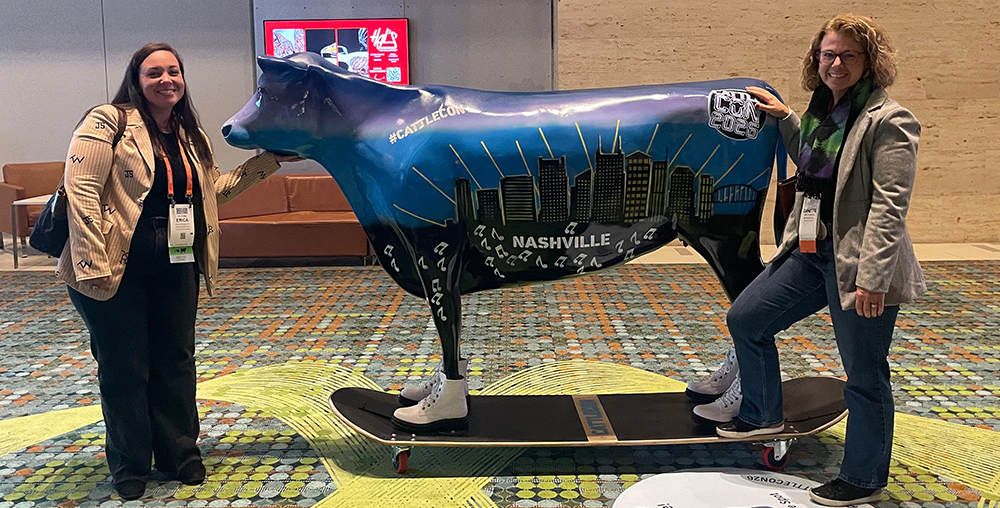
By Danette Amstein and Erica Prescott
On the last day of CattleCon, leadership from the NCBA and the Federation of State Beef Councils took the stage to share their thoughts on the current state of the industry. Words like optimistic and momentum filled the room, yet a Nebraska cattleman offered a reality check by telling an oil boom to bust story. His point: record-high prices for cow-calf producers won’t last forever. “Save your money,” he warned, referring to the cyclical nature of the business.
This blend of grit and optimism perfectly captures the 2026 outlook: a landscape where record cow-calf margins are tempered by a complex market forecast, bolstered by a revolutionary shift in dietary guidelines, and anchored by a renewed focus on ensuring our industry’s legacy remains at the heart of the sustainability conversation.
The RFK Factor: Flipping the Pyramid
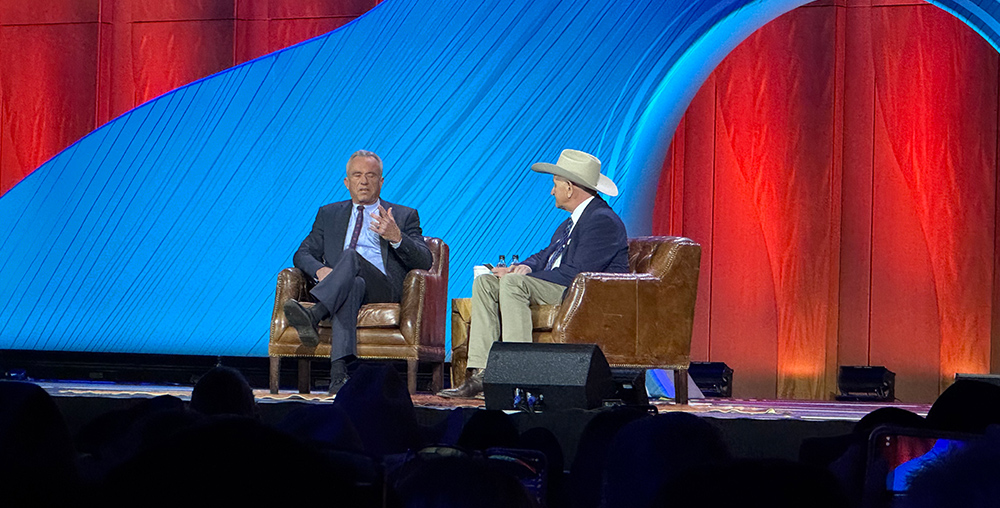
The highlight for many was a conversation between U.S. Secretary of Health and Human Services Robert F. Kennedy Jr. and NCBA President Buck Wehrbein regarding the total overhaul of the U.S. dietary guidelines. The new, streamlined document (just 10 pages) inverts the old food pyramid to prioritize real food and protein at every meal. Kennedy addressed what he called the “systematic mass poisoning” of the American diet by ultra-processed foods, sharing how a carnivore diet transformed his own health. For the industry, the spotlight on protein is a monumental generational shift that aligns high-quality protein with national health conversations.
Market Outlook: The Long, Slow Climb
CattleFax’s outlook reveals “constrained dynamics.” While the total U.S. cattle inventory has dropped to a 75-year low, beef production remains surprisingly resilient, declining only 2.5%, thanks to genetics, carcass weights and the dairy industry’s contribution to feedyard placements. Can we confidently say the pendulum has swung, and we have entered the growth part of the cycle? Maybe – early indications suggest we are headed that way. Such a swing in inventory is, however, complicated by a myriad of things. Here are two “market movers” to watch:
- The Mexican Border: Currently closed in an effort to prevent New World Screwworm from entering the US. A reopening (forecast for late spring/summer 2026) could very quickly add 1.2 million head to the supply chain.
- Drought Migration: CattleFax Meteorologist Matt Makens warned of a 70% chance of spring drought intensification in the Southern Plains (TX, OK, KS). His models suggest the drought then migrates north toward Nebraska and up into Montana later in the year, impacting grass growth, feed production and the herd rebuilding speed.
Tying Legacy to Sustainability
Sustainability in the beef industry is about more than just soil health and grazing plans; it’s about the people. The “Legacy in Action” session highlighted a sobering reality: with herd sizes shrinking and the number of ranching operations declining, the industry’s survival hinges on successful generational handoffs.
Members of the panel shared how, in their cases, they are not just passing down acreage; they are handing over a family’s reputation and a lifelong “why.” To be truly sustainable, a family must ensure the next generation inherits a thriving business they’re ready to lead, rather than a burden they’re forced to carry.
Sustainable land starts with sustainable operations. Ultimately, environmental and generational sustainability are two sides of the same coin: securing the future of the land by properly planning to hand over the reins while still being there to help the next generation navigate the road ahead.
The Bottom Line for Packers and Brands
These key takeaways from CattleCon 2026 challenge processors and brands to look beyond the immediate market cycle and focus on the dual pillars of nutrient density and supply chain legacy. Opportunity lies in meeting the “protein-first” consumer’s demand while acknowledging that the beef you are selling is only as sustainable as the families who produce it. Securing the future of your brand means navigating today’s complex margins while anchoring your strategy in the long-term success of the people behind the product.
About the Author